


Gamla Linköping Open-Air Museum, Sweden
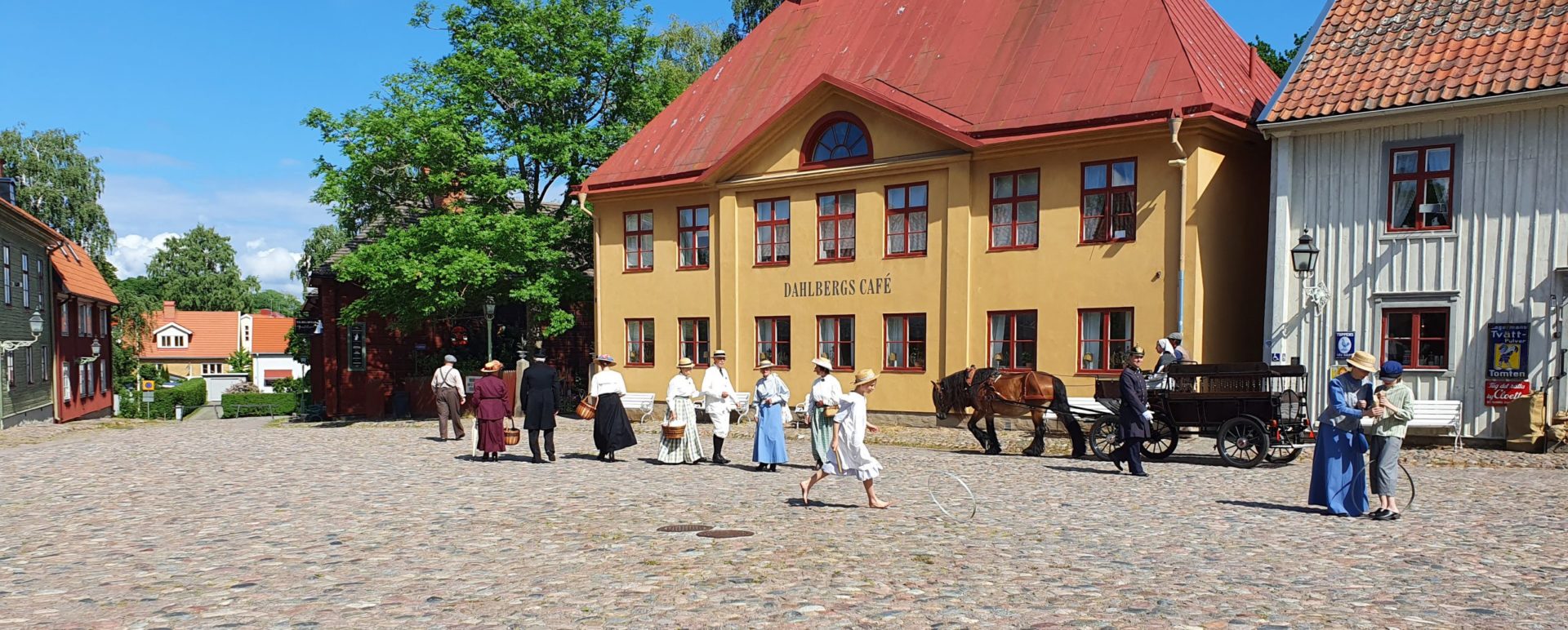
Gamla Linköping Open-Air Museum is a local museum telling the history of the city of Linköping and the surrounding area, depicting the everyday life for people in the late 1800s and early 1900s. It is one of Sweden’s most visited museums and the main tourist attraction in Linköping with about 420,000 annual visitors. The museum was created in the late 1940s, when Linköping went through a massive transformation from a small country town to a modern industrial hub.
Gamla Linköping Open-Air Museum is run by the Municipality of Linköping and consists of three sections: the town district, with about 130 historic buildings, 25 different museums and exhibits, historic gardens, cafés and restaurants; the rural district Valla Farm; and Valla Woods nature reserve. The museum offers exhibitions, events and other activities.
Gamla Linköping’s main target group is families with children, but the museum attracts visitors of all ages and nationalities, and there is a wide range of events and educational activities for adults. The museum uses living history as a method of interpreting cultural heritage and operates according to the motto “where history comes alive”. Buildings, streets, gardens and entire homes from the beginning of 20th century enable visitors to step back in time, with domestic life and work brought to life. This also includes interactive opportunities with visitors invited to take part in activities such as household work and crafts, transforming learning about cultural heritage into a multi-sensory experience. The educational staff wear period costume and during the summer high season, staff also create daily theatrical scenarios and improvisational interaction with the visitors all around the museum area.
There are around 20 permanent staff and 80 seasonal staff. The museum recruits about 50 volunteers, working in different areas. Some work in the museum area, strolling around, dressed in period costume; others help at events or in the gardens. Other volunteer groups take care of the opening of their own museums, such as maintaining and operating old printing machines, farming equipment, carriages, a smithy etc.
We are constantly developing new ways to attract adult learners in the field of cultural heritage.