


Highland Folk Museum, Scotland
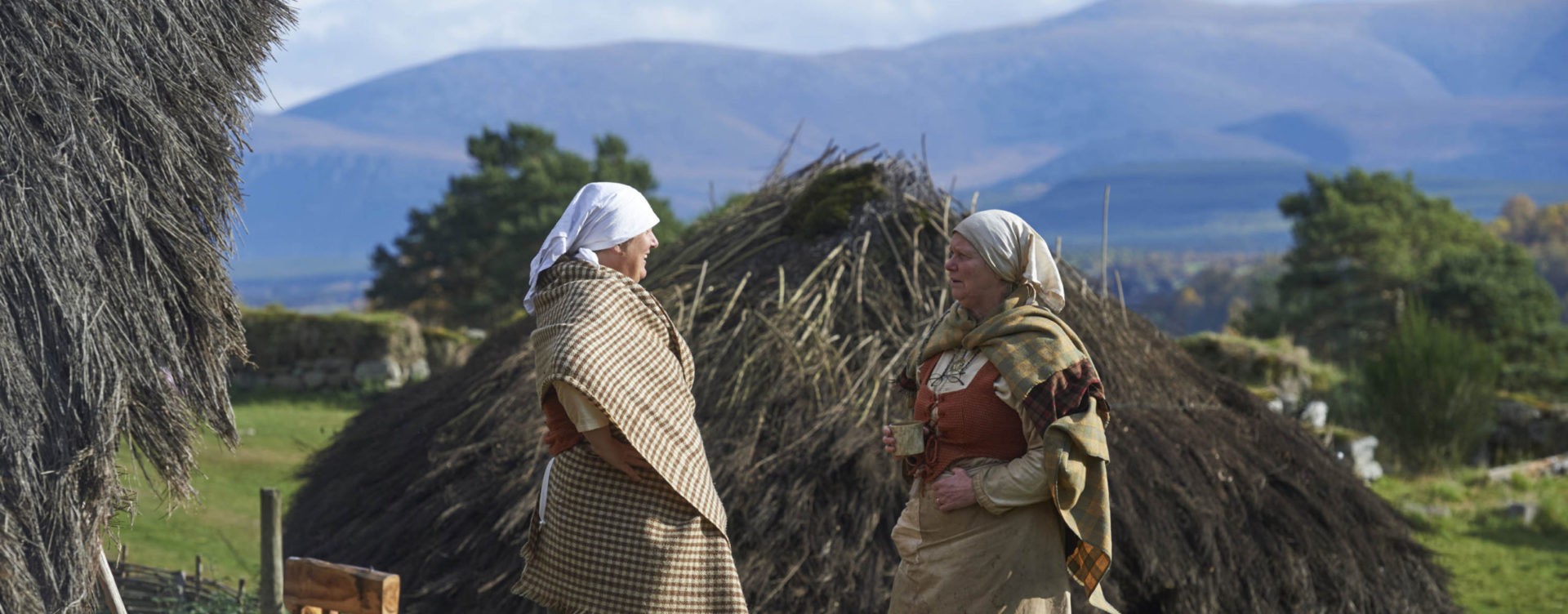
At the Highland Folk Museum we give visitors a taste of how life was lived in the Highlands of Scotland from the 18th century to the mid-20th century. Incorporating original and reconstructed historic buildings and an extensive artefact collection, the museum uses exhibitions, living history and demonstrations to promote education and training in Highland culture and traditional crafts. The Highland Folk Museum was opened originally in 1935 on the island of Iona and was known as ‘Am Fasgadh’ (‘The Shelter’). The museum moved via Laggan to its long term home in Kingussie in 1944 where it became Britain’s first mainland open-air museum.
The site is now sited in Newtonmore in the Cairngorm National Park and features more than thirty historic buildings in different vernacular styles, including a 1700s Township, black houses, croft and farm buildings, a church, a school, a Shinty pavilion and a variety of domestic and commercial structures. It is also the home of the Recognised collection of traditional Highland artefacts and material culture assembled by Isabel F. Grant (1887-1983). The buildings are brought to life by “living history” interpreters, events and activities.
There are twelve permanent staff and approximately thirty seasonal staff. Interpretation staff demonstrate traditional crafts and skills including textiles (dyeing, spinning, weaving), timber and wood craft, agricultural practices, animal husbandry, woodland management; domestic and community/commercial practices (teaching, retail, sawmill, etc.). Staff work in partnership with a variety of organisations to promote education and training in Highland culture and traditional crafts and skills.